
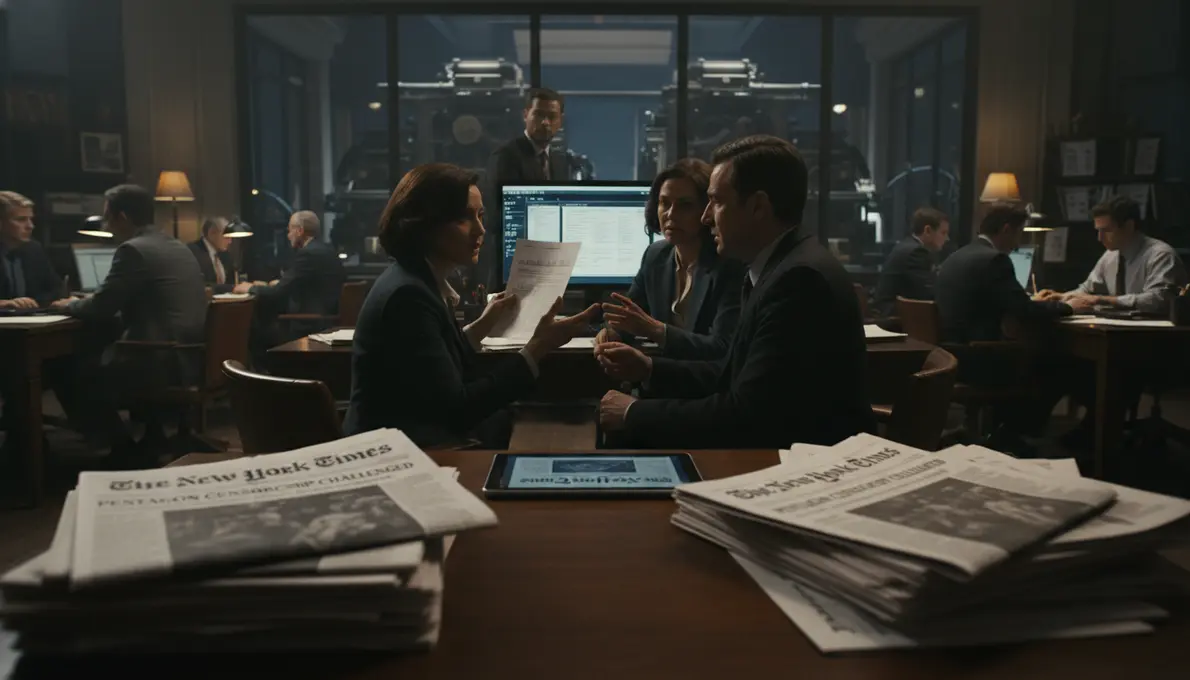
The New York Times Takes on the Pentagon Over New Reporting Rules
In a bold move reminiscent of David versus Goliath, The New York Times has filed a lawsuit against the Pentagon, contending that new rules restricting how reporters cover the U.S. military violate the First Amendment. The lawsuit, unveiled on Thursday in the U.S. District Court in Washington, challenges a 21-page agreement imposed on Pentagon reporters last October, claiming it is both unlawful and unconstitutional.
Press Freedom Under Siege
The Defense Department’s new policy appears to be a well-crafted play to limit journalists’ abilities to engage in their age-old duties—asking questions and gathering information. According to the lawsuit, the policy “seeks to restrict journalists’ ability to do what journalists have always done,” effectively putting a proverbial gag on the press. Six intrepid reporters from the Times even returned their Pentagon access badges in protest, demonstrating their commitment to press freedom.
A Firm Stand
In a statement, a Times spokesperson did not mince words: “The policy is an attempt to exert control over reporting the government dislikes, in violation of a free press’s right to seek information.” This high-stakes battle brings to light the ongoing tensions between media and government, particularly regarding the right to scrutinize and hold accountable those in power.
The Defendants
The lawsuit names key figures, including the Defense Department, Defense Secretary Pete Hegseth, and Pentagon spokesman Sean Parnell, as defendants. It’s an interesting lineup, indeed, as these individuals are tasked with promoting operational security. However, their defense against a free press may not have the sturdy underpinnings they hope for.
Pentagon’s Response
In response to the lawsuit, Chief Pentagon spokesman Sean Parnell acknowledged awareness of the case, expressing eagerness to address these arguments in court. Parnell went on to assert that the policy is not aimed at any specific news outlet, framing it instead as a measure for “preventing leaks that damage operational security and national security.” Some might call that common sense; others might see it as a veil for suppressing dissent.
The Wider Implications
This lawsuit comes in the wake of growing opposition from various media outlets. Notably, five major broadcasters, including NBC News, refused to sign the Pentagon’s agreement back in October. The lawsuit argues that the Pentagon’s policy exemplifies “the type of speech- and press-restrictive scheme” that courts have recognized as a violation of the First Amendment. If nothing else, it sets the stage for a riveting legal showdown.
What’s on the Table?
The new rules effectively prohibit the gathering or publication of any unauthorized information, including declassified materials and off-the-record conversations—whether collected on or off Pentagon grounds. Failure to comply with these draconian measures could lead to withdrawal of Pentagon access, a real kicker for any journalist eager to report the facts.
An Ongoing Battle
Earlier this year, the Department of War (formerly known as the Defense Department) announced plans to shuffle several news outlets from in-house workstations, part of what they call an “annual media rotation program.” This program included media outlets like Breitbart News and the One America News Network, leaving many to wonder about the criteria for inclusion or exclusion.
The Bottom Line
As this legal saga unfolds, it serves as a stark reminder of the delicate balance between national security and the public’s right to know. The New York Times is not just fighting for its reporters but for the very essence of press freedom in America. In a world where information is power, let’s hope that this battle isn’t just a flash in the pan but a catalyst for preserving journalistic integrity.