Controversy Surrounding Military Strikes on Alleged Drug Smugglers
In a dramatic turn of events, Adm. Frank M. Bradley viewed the two survivors of a recent military strike on a suspected drug-smuggling boat as legitimate military targets. This conclusion was drawn based on operational rules that recognized them as narco-terrorists, according to a defense official speaking to NBC News.
The Second Strike: A Legal Quagmire
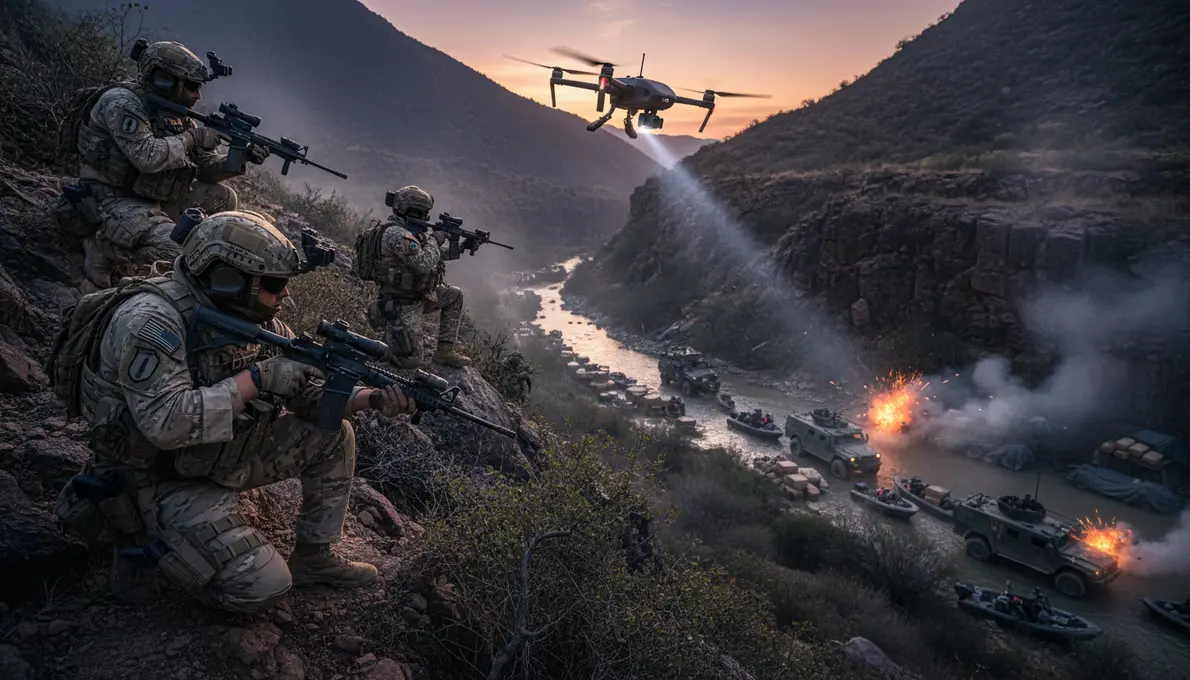
After the initial strike, the military proceeded with a second strike against the same boat, leading to heated debate over its legality. Could this action be classified as a potential war crime? The question weighs heavily on the minds of lawmakers and defense experts alike.
The survivors, after the first attack, were reportedly in electronic communication with another vessel, suspected of being involved in the nefarious world of narcotics trafficking. While the specifics of this communication remain murky, Pentagon commanders interpreted this contact with a “mothership” as a green light—evidence that the survivors were actively engaged in drug smuggling and thus eligible for targeting.
Insights from the Pentagon
The Wall Street Journal reported that Bradley justified the decision to target the survivors by suggesting they were intent on continuing their illicit activities. As a result, the survivors became legitimate targets in the eyes of military leadership.
In anticipation of scrutiny, NBC News reached out to the Pentagon for insights on what Bradley would disclose to lawmakers during his upcoming briefing. Both the House and Senate have launched inquiries regarding the second strike, which ultimately claimed the lives of the two survivors.
The Fog of War
Defense Secretary Pete Hegseth raised eyebrows earlier this week by asserting that he did not observe any survivors following the first strike. “The thing was on fire,” he remarked during a Cabinet meeting, “It exploded in fire and smoke. You can’t see it.” Hegseth went on to describe the situation as part of the “fog of war,” emphasizing how rapidly events can unfold during military operations.
Despite the chaos, he publicly supported Bradley’s actions, insisting that “we have his back.” Bradley, currently in command of the U.S. Special Operations Command, has briefed House Intelligence leaders and is set to engage with the House and Senate Armed Services committees about the strikes.
Reactions from Lawmakers
Senator Mark Warner, D-Va., has indicated that more briefings are expected, as the consequences of these strikes weigh heavily on the legislative process. Rep. Jim Himes, a prominent Democrat on the House Intelligence Committee, expressed his concern, stating, “What I saw in that room was one of the most troubling things I’ve seen in my time in public service.”
Himes added, “You have two individuals in clear distress without any means of locomotion, with a destroyed vessel, who are killed by the United States.” He later clarified that there was no directive to conduct a massacre or grant no quarter in this operation.
Looking Ahead
Adam Smith, the ranking member of the House Armed Services Committee, has confirmed his attendance at upcoming briefings, promising to push for a full committee classified briefing next week. The complex web of military decisions continues to evolve as Congress seeks clarity and accountability.
In a related note, a subsequent strike in October in the Caribbean resulted in two survivors, who were sent back to Colombia and Ecuador for detention and prosecution, according to Pentagon reports. The ramifications of military actions against suspected criminal elements remain a contentious issue, making it clear that the line between legality and impropriety is razor-thin.