Defense Secretary Hegseth Under Investigation
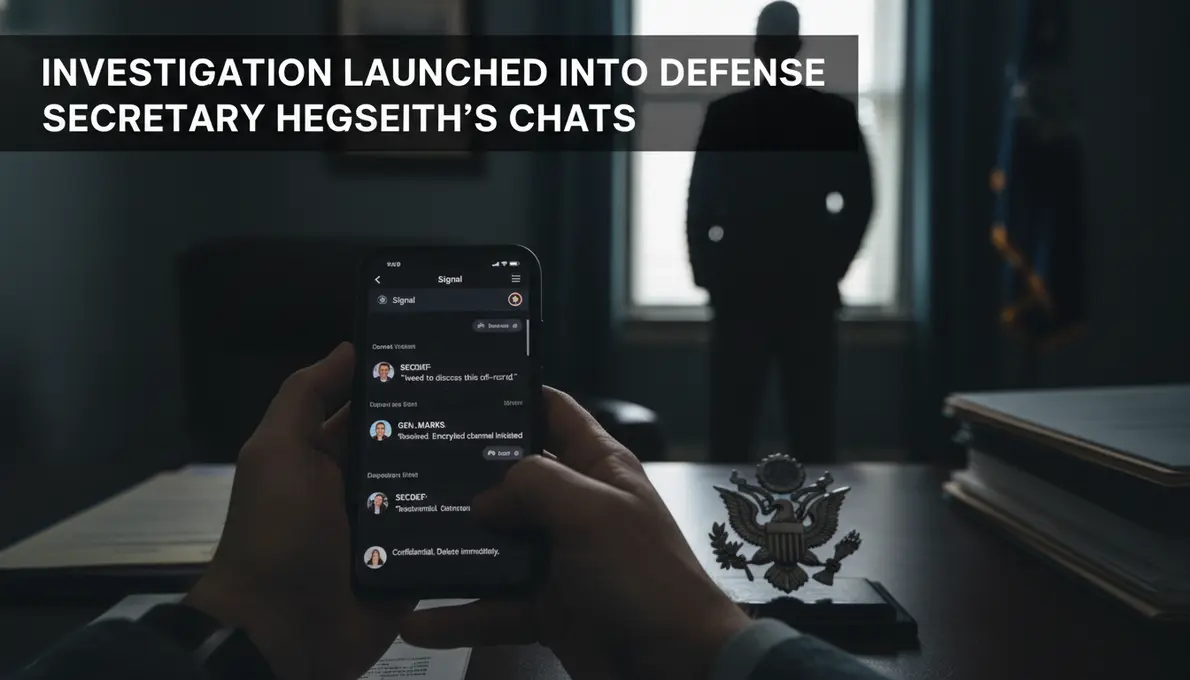
On a rather eventful Tuesday in Washington, Defense Secretary Pete Hegseth received the final draft of the long-awaited Defense Department Inspector General report. This report digs into the intriguing saga of Hegseth sharing sensitive military information on a Signal group chat back in March, as noted by two individuals familiar with the ordeal.
The Report’s Arrival
The report, which has been brewing for over eight months, is expected to make its grand debut to the public as early as this week. It specifically examines Hegseth’s use of Signal, an encrypted yet unclassified messaging app, for sharing details of planned U.S. military strikes in Yemen before they even commenced.
Hegseth’s Position
In a classic “no harm, no foul” stance, Hegseth has persistently asserted that he did not share any classified information during these group chats. However, the Pentagon appeared to be having a quiet day, as they did not respond to a request for comment.
The Origins of the Investigation
This investigation was set in motion by none other than the chairman of the Senate Armed Services Committee, Sen. Roger Wicker, R-Miss., along with the committee’s ranking member, Sen. Jack Reed, D-R.I. They requested the probe on March 27, perhaps savoring their roles as the Senate’s very own Sherlock Holmes.
Group Chat Gaffe
The Signal group chat at the center of the storm also included notable members of President Donald Trump’s national security team. The plot thickened when an editor for The Atlantic magazine was inadvertently added to the conversation—a real-life example of someone “taking a wrong turn on the information superhighway.”
Sharing Sensitive Info: A Risky Game
In a report by NBC News, they revealed that just moments before U.S. fighter jets took off to initiate their strikes against Iranian-backed Houthi rebels in Yemen, Army Gen. Michael Erik Kurilla, then leading U.S. Central Command, sent precise details about the operation to Hegseth. The transmitted information, encompassing critical timing for takeoff and target engagement, posed a significant risk; if it landed in the wrong inbox, it could endanger the pilots involved.
The Fallout
Shockingly, much of this sensitive data made its way into the Signal chat shared by Hegseth with other Trump administration top brass. It didn’t stop there—Hegseth also communicated the same details on a separate chat with family members and his personal attorney. Talk about a “family group chat” gone too far!
A Sensitive Moment for Hegseth
As the report’s release approaches, it arrives at a particularly delicate time for Hegseth. He is currently under scrutiny for a separate incident involving the decision to launch a second strike on a suspected drug-smuggling boat in the Caribbean Sea. This boat allegedly carried 11 individuals, following a previous strike that left at least two survivors. You might say the heat is on!
Concerns Raised
Wicker and Reed have publicly expressed their apprehensions regarding the second strike. Nevertheless, the White House maintains that the strikes adhered to international law, leaving many to wonder just how “international law” is being interpreted behind closed doors.
What’s Next?
In the Signal chat case, Wicker and Reed have sought more details about the communications and any subsequent remedial actions. They have also requested an assessment regarding the transfer of classified information from secured to unsecured systems. The story continues to unfold, and surely, there’s more to come from this intrigue-laden script.