Indiana’s New Congressional Map: A Political Battlefield
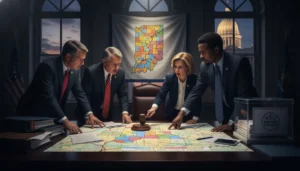
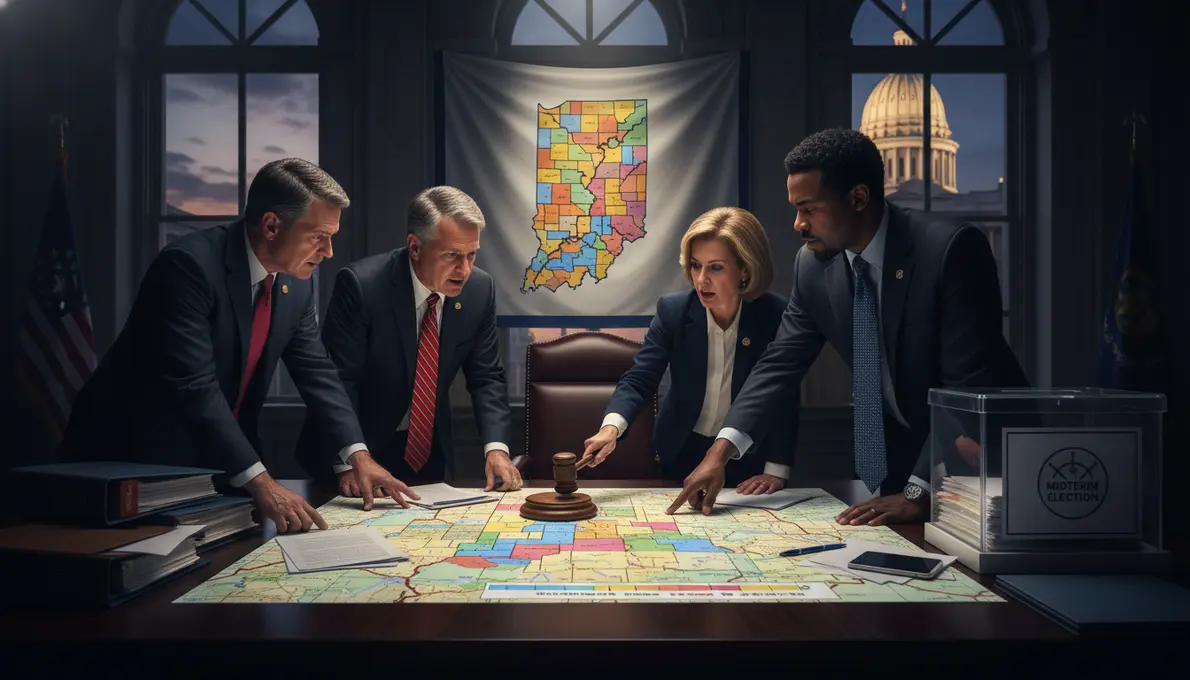
The Indiana House recently threw a political grenade by approving a new congressional map aimed at netting Republicans two seats. The bill passed with a 57-41 vote, but the Senate is already gearing up for a clash as Republican leaders express doubts about the support for this ambitious redistricting effort.
The White House’s Push
Pressure from the White House has been relentless, with President Trump emphasizing the need for a revised map to fortify his party’s shaky hold on the U.S. House ahead of the midterm elections. This redistricting saga has turned contentious, featuring threats of primary challenges and alarming incidents of harassment against GOP lawmakers who dare to oppose the map.
The Swatting Scandal
In a disturbing twist, at least 11 elected Republicans in Indiana have fallen victim to “swatting” attempts—false police reports intended to summon a potentially dangerous law enforcement response. When politics resembles a thriller movie, you know things have gone too far.
Democrats’ Last Stand
Currently, Representatives André Carson and Frank Mrvan stand as the sole Democratic representatives for Indiana in Congress. The newly drawn map threatens to dismantle their districts, making redistricting feel more like a game of Jenga than public policy. Specifically, the proposal seeks to fracture Indianapolis into four separate districts, thus diluting the Democratic vote concentration of the state’s urban hub.
Politics Over People
Rep. Ben Smaltz, the mastermind behind this legislation, stated that the map was crafted with politics at the forefront and came courtesy of the National Republican Redistricting Trust—organizations known for their strategic redistricting efforts. When pressed about whether public funds financed the drawing of this map, Smaltz played coy, claiming ignorance regarding who footed the bill.
Democratic Outcry
Democratic lawmakers voiced their outrage as the map sailed through the House after an arduous three-hour debate filled with condemnation. State House Minority Leader Phil GiaQuinta slammed the move, characterizing it as a direct assault on the will of Hoosiers: “This is a blatant tell that you don’t care what Hoosiers want.”
Rep. Matt Pierce took it a step further, criticizing the audacious attempt to wipe out the Democratic presence in the state congressional delegation. He highlighted the absurdity of a Congress member balancing the interests of both urban neighborhoods in Indianapolis and rural communities along the river.
A Bipartisan Debate
Despite some Republicans like State House Speaker Todd Huston offering support, Smaltz stood almost alone in defending the map at Friday’s discussion. He stated, “While the census anchors the process, nothing in the law prevents a legislature from revisiting maps when circumstances demand it.” True, but it certainly feels like a clever ploy to sidestep accountability.
A National Phenomenon
Indiana isn’t the only state embroiled in this mid-decade redistricting frenzy. The U.S. Supreme Court recently gave a nod to Texas, allowing a new map that could net Republicans up to five extra seats in 2026. Meanwhile, California is crafting a Democratic response to counteract any GOP gains revealed in the last month’s elections.
Other states like Missouri and North Carolina are not far behind, launching their maps to potentially add seats for the Republican side. Even Ohio is jumping on the bandwagon with new district lines that may offer a slight advantage. Meanwhile, some states like Utah are experiencing court-ordered changes that could benefit Democrats. The landscape is shifting, and the political chess game is just heating up.
The Road Ahead
As Republicans in Florida and Democrats in Virginia prepare to redraw their maps, one thing is clear: redistricting has become a political sport, full of unpredictable strategies and, unfortunately, more than a little chaos. Buckle up, folks—this rollercoaster ride is far from over!