
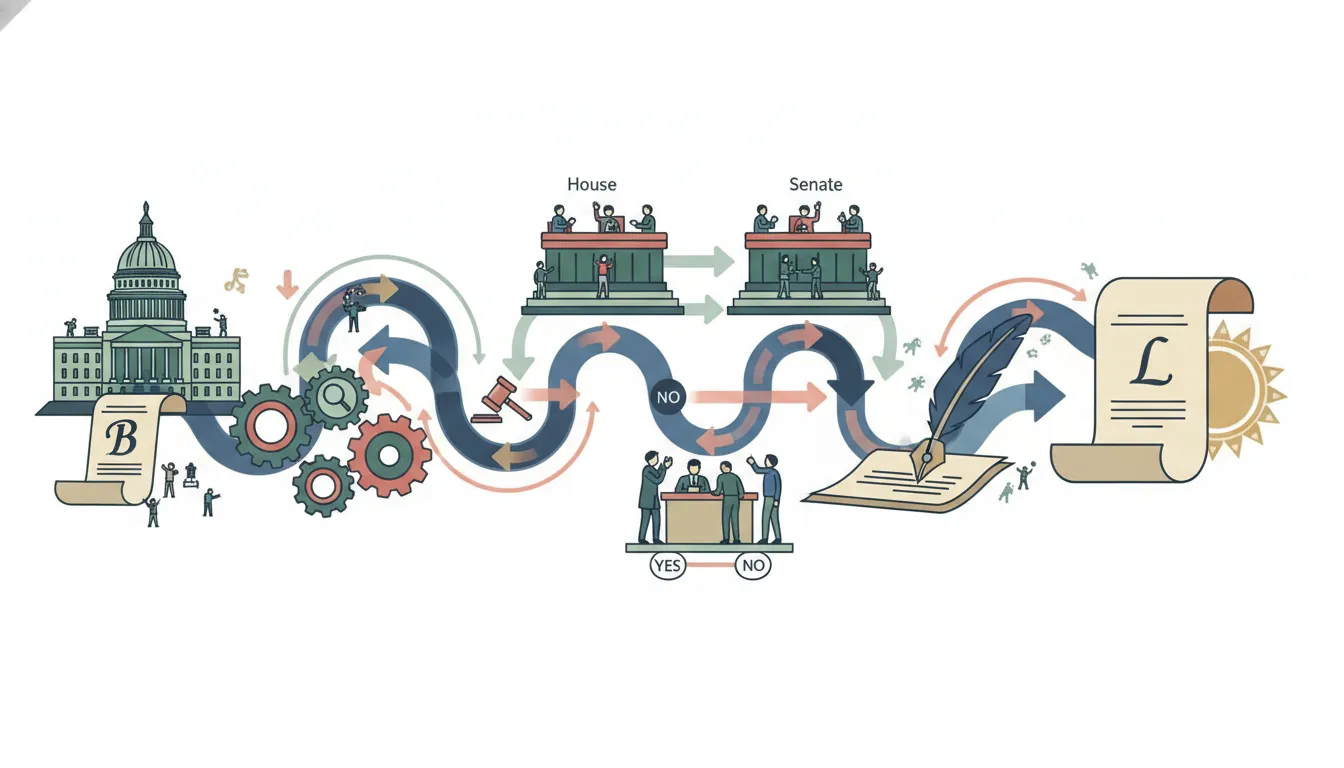
How a Bill Becomes a Law: A Visual Guide to the U.S. Legislative Process
Turning an idea into a federal law in the United States is a complex journey designed to encourage debate and compromise. Both the House of Representatives and the Senate must agree on the exact same bill before it can go to the President.
This guide breaks down the step-by-step process and highlights the key differences between the two chambers of Congress.
The Step-by-Step Journey of a Bill
Most bills can start in either the House or the Senate, but they all follow the same basic path.
Step 1: Introduction & Committee Review
A member of Congress introduces a bill, which is then sent to a relevant committee for a detailed review. The committee holds hearings, makes changes (amendments), and votes on whether to send it to the full chamber.
Step 2: Floor Debate & Chamber Vote
If the committee approves the bill, it moves to the full chamber for debate and a vote.
-
In the House, debate time is limited and controlled by the Rules Committee. A simple majority (218 of 435) is needed to pass.
-
In the Senate, debate is essentially unlimited, which can lead to a filibuster (a tactic to delay a vote). Ending a filibuster requires 60 votes.
Step 3: The Other Chamber
A bill that passes in the first chamber then goes to the other chamber (House → Senate or Senate → House), where it repeats the same process: committee review, debate, and a vote.
Step 4: Reconciling Differences
If the second chamber passes a different version of the bill, a Conference Committee—with members from both the House and Senate—meets to create a single, compromise bill.
Step 5: Final Vote & Presidential Action
Both the House and Senate must vote to approve this final, identical bill. It is then sent to the President, who can:
-
Sign it: The bill becomes law.
-
Veto it: The bill is sent back to Congress with the President’s objections.
-
Take no action:
-
If Congress is in session, the bill becomes law after 10 days without a signature.
-
If Congress adjourns, it does not become law (a “pocket veto”).
-
Step 6: Overriding a Veto (Rare)
If the President vetoes a bill, Congress can still make it a law by overriding the veto with a two-thirds majority vote in both the House and the Senate.
Key Differences Between the House and Senate
The House and Senate were designed to have different characters, ensuring balanced lawmaking.
| Aspect | House of Representatives | Senate |
|---|---|---|
| Focus | Efficiency and speed, representing the people based on population. | Deliberation and debate, giving equal representation to each state. |
| Debate Rules | Strictly limited by the Rules Committee. | Open, with unlimited debate and amendments (filibuster possible). |
| Key Powers | Originates all revenue (tax) bills. | Approves presidential nominations (like judges) and treaties. |
| Vote to Pass a Bill | Simple majority (usually 218 votes). | Simple majority, but often requires 60 votes to end debate and proceed to a vote. |
In summary: The House is structured for faster action on popular legislation, while the Senate is designed to protect minority views and encourage careful consideration. This intricate process ensures that a broad consensus is reached before any idea becomes a binding law for the entire nation.